

Uncoated Stainless Steel Pan: How to Sear Without Sticking

Updated: 8 hours ago
An uncoated stainless steel pan does not stick if you preheat it until a water drop glides across the surface like a bead, then add oil. Coated pans forgive a lot but rarely last.
If you want better browning, durability and a kitchen without fluorochemicals, you will sooner or later end up with uncoated stainless steel. It has a reputation for being demanding, unfairly: with a few simple habits, nothing sticks, and you get results a non-stick pan can hardly deliver.
This guide explains why switching is worth it, how to sear and clean properly, and which size suits you.
Straight to the product in our shop: Premium Stainless Steel Pan

The key points in brief
Stainless steel is uncoated, robust and needs no PFAS coating.
Our pan is induction-compatible, oven-safe and nickel-free.
The key to preventing sticking is the right heat: do the water drop test before adding oil.
The fond (browned bits) on the bottom of the pan is not a mistake but the base for pan sauces.
Seasoning is not needed, and cleaning is easier than you think.
Why choose an uncoated pan?
Health and environment
Non-stick coatings made of PTFE belong to the PFAS group of substances. According to the German consumer advice centre (Verbraucherzentrale), empty, badly overheated pans can release toxic fumes from about 360 °C, and damaged coatings can release micro- and nanoplastics.
In a market check by Verbraucherzentrale NRW, 17 of 31 pans contained PFAS. The main concern is the production and disposal of these hardly degradable substances. The consumer advice centre describes uncoated stainless steel and iron as durable, plastic-free alternatives.
Flavor and durability
Only in a properly hot stainless steel pan do you get the crust that gives meat, fish and vegetables their roasted flavor. A browned residue also stays on the bottom, known as fond. It is the foundation of every good pan sauce. On top of that, stainless steel is rustproof, very heat-resistant and lighter than cast iron. A good stainless steel pan stays with you for years because nothing flakes off or scratches.
The honest catch
Guides list as drawbacks that food burns more easily, usually a little more fat is needed and cleaning can be more laborious than with non-stick pans. This is exactly where the right technique comes in: once you know it, you have these problems under control.
How to stop food sticking: step by step
1. Preheat well: the water drop test
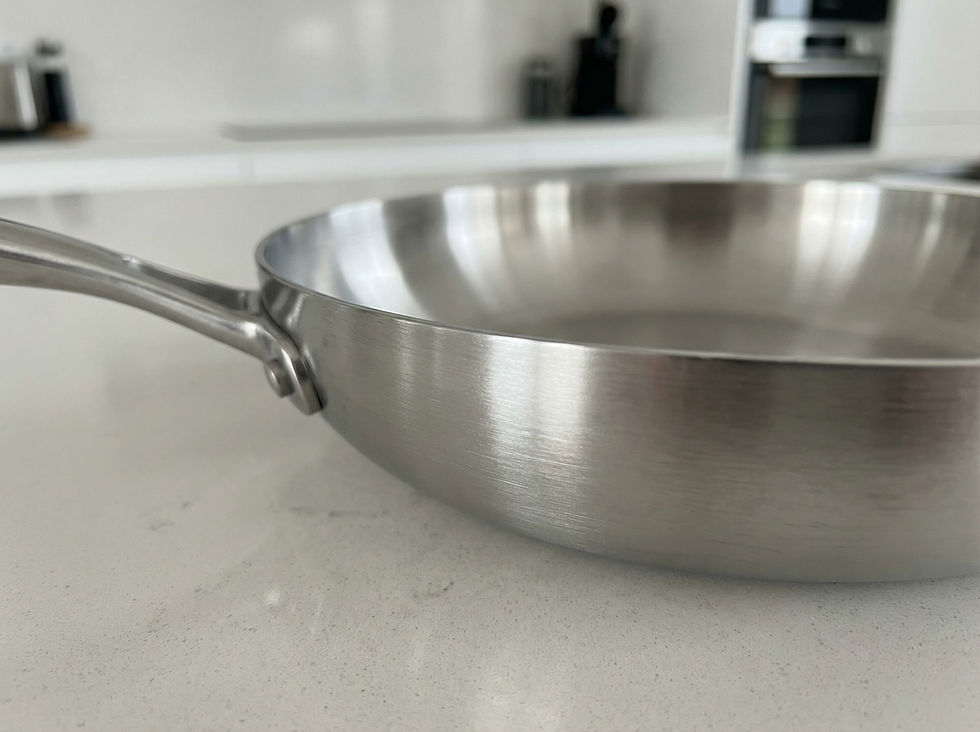
Place the dry pan on medium heat and after a while add a drop of water. If it sizzles away immediately, the pan is still too cold. If it glides across the bottom as a shiny bead, the pan is ready. This phenomenon is called the Leidenfrost effect: a cushion of steam carries the drop, and this is exactly the ideal state for searing.
2. Add the oil only then
Add a little oil to the hot pan, swirl it briefly and wait a few seconds. A tip from guides: brush meat with oil directly, so you need less in the pan.
3. Pat food dry and do not overcrowd
Pat meat, fish and vegetables dry beforehand. Moisture cools the pan and makes food stick. Cook in two batches rather than overloading the pan, because too much food lowers the temperature.
4. Be patient when turning
Meat releases by itself once a crust has formed. If it is still stuck, it simply needs more time. Do not pull; wait briefly and try again.

From fond to pan sauce
The brown bits on the bottom are the ultimate flavor carrier. Take the food out, deglaze the pan with a splash of water, stock or wine and loosen the fond with a wooden spoon. Let the liquid reduce briefly, season to taste and finish with butter or herbs if you like. In a coated pan this residue hardly forms.
Cleaning and care
Stuck-on residue: Boil water with a dash of dish soap in the pan or let it soak overnight.
Limescale spots and bluish streaks: boil out with vinegar or lemon concentrate.
No steel wool: It is not needed and roughens the surface unnecessarily.
Seasoning: Unlike cast iron, not needed.
Size, induction and oven
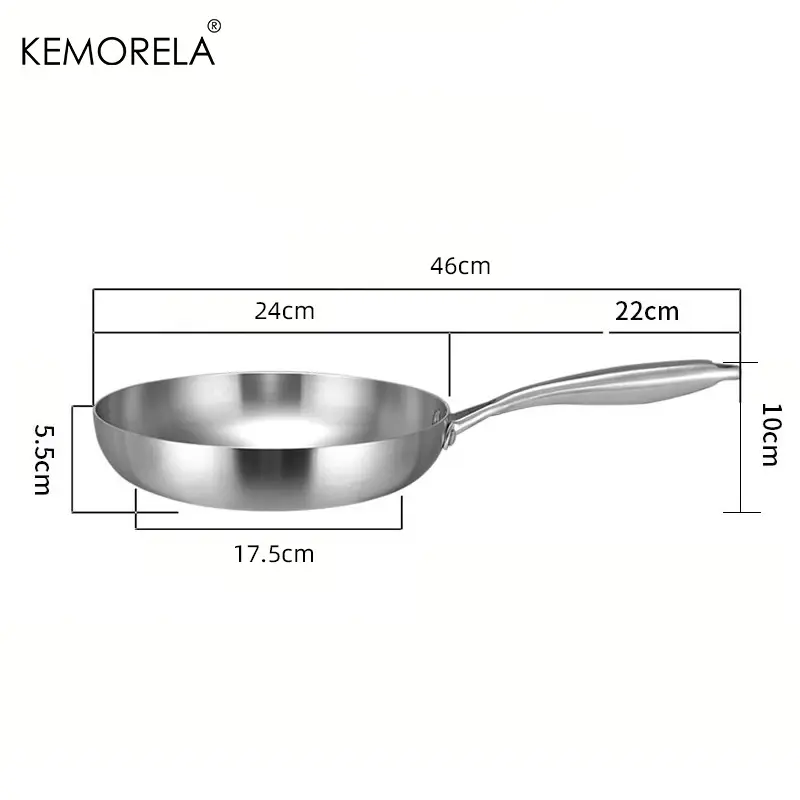
The diameter should match your hob. According to guides, pans from 28 cm suit four to six people well, while smaller sizes are enough for one or two. Our pan comes in 22, 24, 26, 28 and 30 cm.
It is induction-compatible, so you can use it on any hob, it is oven-safe so you can sear meat first and finish it in the oven, and it is made of nickel-free stainless steel, which can also matter for people with a nickel allergy.
Who is the pan right for?
You want crust, roasted flavor and pan sauces → uncoated stainless steel.
You want to avoid PFAS and coating flakes and want a pan that lasts for years.
You often cook fish or scrambled eggs without any effort → add a second, small pan for that. Stainless steel takes some practice here.
Our Premium Stainless Steel Pan – uncoated comes in 22, 24, 26, 28 and 30 cm, from €45 – induction-compatible, oven-safe and nickel-free. With the code WILLKOMMEN10 you save 10% on your first order.
Conclusion: Is an Uncoated Stainless Steel Pan Worth It?
An uncoated stainless steel pan is worth it if you value browning, durability and a kitchen without PFAS coatings. With the water drop test, a little oil and some patience when turning, nothing sticks in an uncoated stainless steel pan.
Who is an uncoated stainless steel pan right for?
It suits everyone who likes to sear hot and make pan sauces from the fond. For delicate dishes such as scrambled eggs, a small second pan is a sensible addition to your uncoated stainless steel pan.
Uncoated Stainless Steel Pan: Frequently Asked Questions
Why does food stick in a stainless steel pan?
Usually the pan is not hot enough or the food is too wet. Preheating until a water drop glides as a bead, using little oil and being patient when turning solve the problem.
Do I have to season a stainless steel pan?
No. Unlike cast iron, stainless steel needs no patina. Proper preheating is enough.
Is an uncoated pan healthier than a Teflon pan?
It contains no PFAS coating and sheds no coating flakes. The consumer advice centre therefore names uncoated stainless steel as a plastic-free, durable alternative.
What is the best way to clean a stainless steel pan?
Boil residue with water and dish soap or soak it overnight, and remove limescale spots with vinegar. Steel wool is not needed.
Is the pan induction-compatible and oven-safe?
Yes. Our stainless steel pan is induction-compatible and oven-safe and made of nickel-free stainless steel.
What pan size do I need?
Choose the diameter to match your hob. From 28 cm, a pan is enough for four to six people according to guides; for one or two people, smaller sizes are sufficient.
More from our shop
See all our kitchen tools: Go to the shop


Comments