
Wild garlic pesto – homemade, vibrant & ready in 15 minutes

Updated: Jul 24
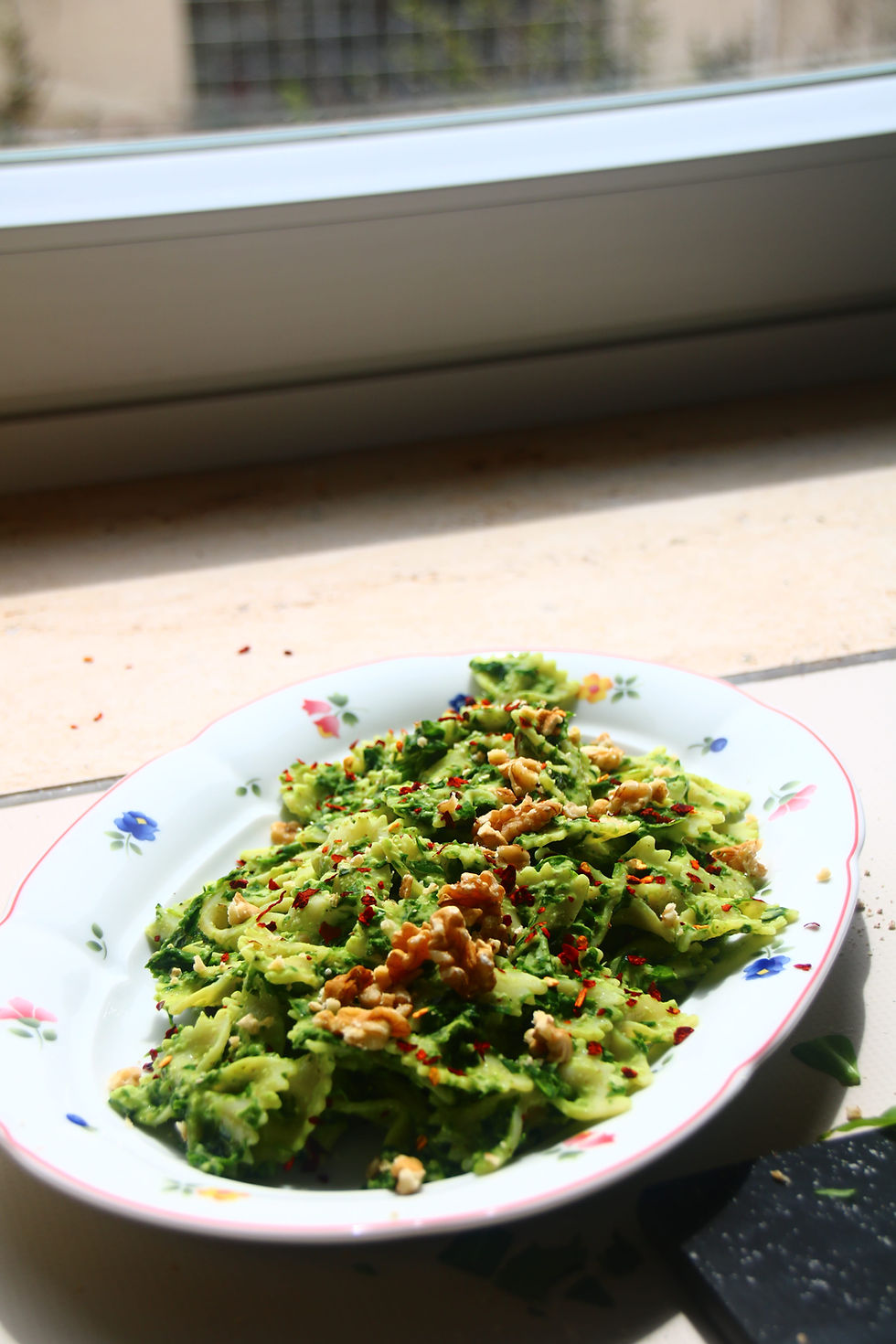
As a cook, wild garlic is one of the most exciting ingredients of the year – not because you can find it on a supermarket shelf, but because you can't. From March to May, it grows in the shade of damp woodland floors, and the first batch of wild garlic pesto I make each spring is always this one.
When is wild garlic in season in the UK? Peak season runs from late March through May, with the finest leaves available in April. Wild garlic pesto is a fresh, deeply flavourful spring condiment made from foraged wild garlic leaves, offering all the warmth of garlic without the sharpness of the raw clove.
Wild garlic has an eight-week season. This pesto makes it last all year.
Beyond pesto, wild garlic works beautifully in gnocchi, wild garlic soup, compound butter or sliced into fine julienne strips as a garlic substitute in a spring vegetable stir-fry. It's also one of the richest plant sources of vitamin C – seasonal, local and genuinely good for you.
Vegan? No problem: swap the pecorino for 2 tbsp nutritional yeast – it brings the same depth and umami without any dairy.
Cashews vs pine nuts vs walnuts: Cashews give the creamiest, mildest result. Pine nuts are the classic. Walnuts add a slightly bitter note – all three work well.
Foraging safely: Wild garlic leaves resemble lily of the valley, which is toxic. The difference is simple: crush a leaf between your fingers – if it smells strongly of garlic, you've got the right plant.
No stick blender? A food processor works just as well – skip the measuring jug and blend directly in the bowl.
Ingredients for wild garlic pesto

makes approx. 2–3 small jars (150 ml each)
250g olive oil
200g wild garlic
25g cashew nuts (alternatively pine nuts or walnuts)
25g mild pecorino (parmesan is also possible)
1 tsp salt
lemon juice and zest of one lemon
Instructions
Rinse the wild garlic thoroughly under cold water – check for small insects and soil, as it comes straight from the wild.
Spin dry in a salad spinner or drain well in a colander.
Roughly chop the wild garlic leaves.
Tip: The drier the wild garlic, the longer the pesto keeps – residual moisture significantly shortens its shelf life.
Add the chopped wild garlic to a tall measuring jug.
Add the roughly chopped cashews, lemon juice, lemon zest and salt.
Grate the pecorino directly into the jug using a Microplane or fine grater.
My trick: Grating the cheese with a Microplane means it dissolves almost completely into the pesto, creating a silky, bound texture you just can't get with a standard grater.
Pour in the olive oil in a thin stream and blend with a stick blender until smooth and even.
Taste and adjust: more salt, more lemon or a splash more oil if needed.
Spoon the pesto into clean jars, seal with a thin layer of olive oil and close the lid.
Tip: The olive oil seal isn't decorative – it protects the pesto from oxidation and keeps it vibrant and fresh. Stored in the fridge, it keeps for several weeks. These little jars also make the most personal spring gift you can give.
Resumé
Wild garlic pesto is, for me, the truest sign that spring has properly arrived. No long ingredients list, no special equipment – just good wild garlic, a few pantry staples and a short, exciting season to work with.
Why does wild garlic pesto work so well for flexitarians? Because it's built around what nature actually offers right now – seasonal, foraged and full of flavour. Wild garlic delivers the warmth of garlic without the heat, and the whole recipe comes together in under 20 minutes. It's plant-forward cooking without compromise.
Tossed through pasta it's unbeatable – but it also works as a spread on sourdough toast, stirred into a vinaigrette or spooned over a bowl of soup.
"Don't buy it. Make it. Six ingredients, one season, one jar."
Get inspired by food for flexitarians

The tools for this recipe
Homemade dough needs two things: a clean work surface and even portions. That’s exactly what these two are made for:
Stainless steel dough cutter & bench scraper – portions your dough cleanly and clears the worktop in seconds.
Premium stainless steel cutting board – non-porous and odour-neutral: the hygienic base for cutting, rolling and plating.
The code WILLKOMMEN10 gets you 10% off your first order – our thank-you for joining the newsletter.
FAQ
Can I substitute the cashew nuts with another nut?
Yes, pine nuts or walnuts work well as substitutes, as mentioned as alternatives in the recipe itself. Each nut gives a slightly different flavor, but all provide the creamy texture pesto needs.
How long does homemade wild garlic pesto keep?
Stored in a sealed jar with a thin layer of olive oil on top, it keeps in the fridge for about a week. For longer storage, freeze it in small portions for up to 3 months.
Can I make this pesto vegan?
Yes, simply omit the pecorino or replace it with a plant-based hard cheese alternative or a bit of nutritional yeast for that umami note. The nuts and olive oil still give the pesto its rich base.


Comments